The Environmental Monitoring in the Digital Age: Tools, Challenges and Perspectives
Environmental monitoring is today one of the most crucial tools in the fight against climate change and the sustainable management of natural resources. It is not simply a matter of measuring physical or chemical parameters, but of building a deep and continuous understanding of the ecological systems around us, in order to anticipate critical issues, guide public policies and ensure the quality of life of communities.
An Increasingly Widespread Sensor Network
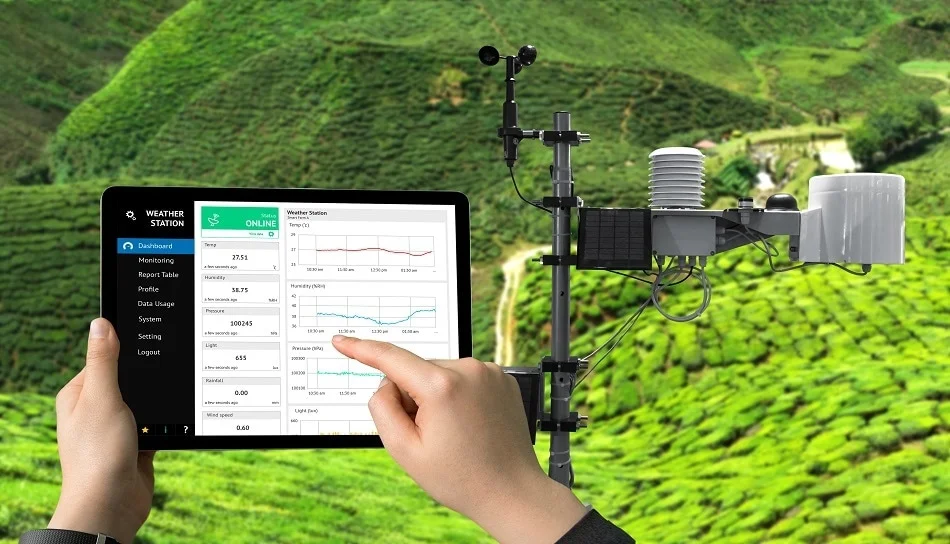
In recent decades, the spread of distributed sensor networks across the territory has revolutionized data collection methods. Automated weather stations, oceanographic buoys, air quality monitoring units and low-cost IoT devices now form a true nervous infrastructure of the planet, capable of transmitting real-time information on temperature, humidity, pollutant concentrations, water levels and much more. This density of data, unthinkable just twenty years ago, opens new scenarios for environmental risk management.
The Fundamental Role of Satellite Remote Sensing
Alongside ground-based networks, satellite remote sensing has taken on an increasingly central role. Constellations such as the European Space Agency’s Copernicus provide high-resolution multispectral images that allow monitoring of forest cover, glacier extent, surface water quality and urban area evolution. The analysis of time series of satellite images makes it possible to detect decade-long trends with a precision that no traditional method could guarantee.
Artificial Intelligence and Predictive Analytics
The enormous volume of data generated by these heterogeneous sources has made the use of artificial intelligence and machine learning indispensable. Classification algorithms and predictive models are trained on historical datasets to identify anomalies, forecast extreme events such as floods or heatwaves, and optimize the operational responses of competent authorities. The integration of environmental data and climate models represents in this sense one of the most promising frontiers of applied research.
Towards Participatory Monitoring
One often underestimated aspect concerns the contribution of so-called citizen science: the collection of observations by ordinary citizens, through mobile applications or collaborative platforms, is becoming a valuable complement to official systems. Reports of invasive species, detection of microplastics in water or urban noise measurements are just some examples of how the active participation of civil society can enrich the quality and reach of monitoring.
Conclusions
The future of environmental monitoring is inevitably intertwined with that of digital technologies. The ability to integrate data from different sources, process it in real time and translate it into accessible and actionable information represents a strategic priority for governments, research institutions and businesses. Only through a systemic and interdisciplinary vision will it be possible to transform the vast amount of available data into useful knowledge to protect ecosystems and build a more resilient future.
Leave a Reply